

8 Questions to Ask When Considering Pet Insurance
Before signing up for pet insurance, make sure you ask these 8 important questions to find the right plan for your pet’s health and your budget.


Table of Contents
Table of Contents

Farmers CSR for 4 Years
Leslie Kasperowicz holds a BA in Social Sciences from the University of Winnipeg. She spent several years as a Farmers Insurance CSR, gaining a solid understanding of insurance products including home, life, auto, and commercial and working directly with insurance customers to understand their needs. She has since used that knowledge in her more than ten years as a writer, largely in the insurance...
Leslie Kasperowicz

Senior Director of Content
Sara Routhier, Senior Director of Content, has professional experience as an educator, SEO specialist, and content marketer. She has over 10 years of experience in the insurance industry. As a researcher, data nerd, writer, and editor, she strives to curate educational, enlightening articles that provide you with the must-know facts and best-kept secrets within the overwhelming world of insurance....
Sara Routhier

Licensed Insurance Agent
Brandon Frady has been a licensed insurance agent and insurance office manager since 2018. He has experience in ventures from retail to finance, working positions from cashier to management, but it wasn’t until Brandon started working in the insurance industry that he truly felt at home in his career. In his day-to-day interactions, he aims to live out his business philosophy in how he treats hi...
Brandon Frady
Updated May 2026
Before signing up for pet insurance, make sure you take the time to get answers to the most important questions to ask before buying pet insurance.
- Vet care in the U.S. averages over 15 billion a year
- Pet insurance starts as low as $18/mo for cats and $35/mo for dogs
- Nationwide also insures small exotic pets like rabbits
If you think going without a policy is a risk worth taking or an extra bill you can avoid, consider the cautionary tales of both veterinarians and pet owners who’ve incurred exorbitant costs. You wouldn’t sleep easily at night without homeowners’ insurance, so why should protection for your pets be any different?
We turned to pet industry professionals from vets to insurance providers, as well as real-life pet owners, to explain how a customized insurance plan from the best pet insurance companies can help you avoid the heart-wrenching decision of foregoing treatment for your pet or going into debt.
Interested in shopping for pet protection today? Find the best quote for pet insurance by entering your ZIP in our free tool.
Top 8 Questions to Ask Before You Buy Pet Insurance
You’ve welcomed your furry loved one to the family and have filled your home with toys, treats, and adorable pet accessories, or perhaps you’re considering it. The one thing that isn’t always so perfect is the potential pet healthcare costs associated with your beloved friends.
I wish more people had pet insurance, and I'm not sure why they don't. Maybe they don't realize how expensive it is when your pet has a serious illness.
Jeanette Cereske Pet Owner
Just like a child, your pet will incur endless expenses throughout his or her lifetime, which is why more and more pet owners are turning to pet insurance policies to cover the veterinary costs of their dogs, cats, and other critters.
Knowing the key pet insurance questions to ask when considering pet insurance will help you get the best coverage for your pet. If you are interested in learning how to find cheap insurance for all your needs, we created the ultimate insurance cheat sheet that goes over coverage options and rates for everything from pet insurance to life insurance.
#1 – How much does pet insurance cost?
Many pet owners believe one of the main pet insurance myths that pet insurance will break the bank, or aren’t convinced that proactively purchasing pet insurance is a smart move.
However, pet insurance is generally affordable for companion pets like cats and dogs, with rates starting as low as $20 per month.
Pet Insurance Monthly Rates: Cats vs. Dogs| Company | Cats | Dogs |
|---|---|---|
 | $24 | $39 |
 | $20 | $35 |
 | $26 | $41 |
 | $28 | $44 |
 | $27 | $43 |
 | $22 | $35 |
 | $29 | $42 |
 | $50 | $80 |
 | $26 | $40 |
 | $30 | $45 |
Others simply wonder whether there are more cost-effective savings options that trump pet insurance, explains Dr. Doug Kenney, a general practice veterinarian, expert, and author on pet health insurance, in an article for PreventiveVet.com.
According to Rebecca Wallick, a contributing editor at The Bark.com and executive director of MCPAWS Regional Animal Shelter in McCall, Idaho, the average cost of a typical corrective surgical procedure for canines will leave you working like a dog just to afford the cost of care.
For example, take these prices of various medical procedures:
- Gastric Torsion (Bloat): $1,955
- Foreign-Body Ingestion: $1,629
- Pin in Broken Limb: $1,000
- Cataract (Senior Dog): $1,244
And, if your furry friend is among the almost 12 million pets in the United States diagnosed with cancer each year, the cost of surgeries and treatments can surpass the thousands.
Even the annual costs of routine pet care can add up. The American Pet Products Association’s 2024-2025 National Pet Owners Survey found that U.S. dog owners spend $331 each year on vet visits, while cat owners spend $179.
#2 – Which pets are the most expensive to insure?
Now that you have a general sense of how pet insurance works, here’s some good news: You do have some control over figuring out what your ideal insurance policy should look like based on the kind of pet you choose.
For example, older pets and certain breeds might necessitate higher pet insurance costs.
When it comes to cats and dogs, Rob Jackson, cofounder and CEO of Healthy Paws Pet Insurance & Healthy Paws Foundation, attributes the higher cost of dog insurance vs. cat insurance to the fact that dogs tend to get into more mischief than their feline friends.
[table “2423” not found /]Jackson says that Healthy Paws Pet Insurance’s average monthly cat premium is around $25, whereas the average monthly dog premium is around $40. Note: While most companies only insure cats and dogs, Nationwide also covers birds, rabbits, snakes, turtles, and other animals.
Breed plays a big role. Mixed breeds tend to be healthier than purebreds, which are susceptible to hereditary conditions. Hereditary conditions can include conditions such as hip dysplasia, heart disease, and cancer. All these conditions are costly to treat and are just one of the many reasons more and more owners are turning to pet insurance.
Where you live is also a factor. Pet insurance companies pay claims based on veterinary bills.
Vet surgery costs in New York are twice as much as they are in Topeka, Kansas.
Nick Braun Founder of PetInsuranceQuotes.com
Because of this, they charge more for policies in high-cost-of-living areas, such as New York and California. Also worth noting is that many pet insurance companies offer discounts for families with multiple pets.
Be sure to ask if there are any multiple-pet discounts at your company. Liz Watson, Chief Marketing Officer at Hartville Pet Insurance Group, says there is often a 10% savings for each additional pet at Hartville Pet Insurance Group.
The process for getting a multi-pet discount is similar to securing the best multi-vehicle auto insurance discounts. You will have to insure each pet at the same company and fill out information for each pet.
#3 – Can I buy pet insurance after my pet gets sick?
Pet insurance does not cover pre-existing medical conditions, so it’s important to sign up before your pet becomes ill or seriously injured.
While you can buy pet insurance after your pet gets sick, your pet’s pre-existing medical condition won’t be covered.
Jeanette Cereske, a pet owner from Pennsylvania, learned the hard way just how expensive a cancer diagnosis can be. Her beloved cat Sugar, a domestic short hair, was diagnosed with mammary cancer.
Over the course of the next 16 months, Cereske’s 11-year-old cat underwent surgeries and five rounds of chemotherapy. The total cost: $16,000.
Cereske, an instructional designer for a small high-tech firm in San Francisco, says that it was a huge wake-up call. At that point, she and her husband decided to insure all their cats.
Not sure if your pet’s issues fall under the category of a pre-existing condition? No pet insurance company covers pre-existing conditions.
Take a look at how the term is typically defined: A pre-existing medical condition is any injury, illness, or irregularity noticed by you or your veterinarian before the end of your waiting period, even if your pet never went to see the veterinarian for it.
While no pet insurance company covers pre-existing medical conditions, it’s still worth considering insurance that will protect you from future unrelated health expenses.
They can still be covered for other conditions that develop while the pet is under the protection of the pet insurance policy.
Christie Long Chief Veterinarian for PetCoach.com
For Cereske, that proved to be the case with Sugar, who developed two additional illnesses that were covered by pet insurance, along with some dental work, before a final illness (lung cancer) ended her life.
Because they didn’t have insurance for Sugar prior to her diagnosis, the costs of her specific treatments were not covered; her cancer was considered a pre-existing condition.
#4 – Are alternative treatments covered by pet insurance?
With advancements in medicine, more veterinarians are performing alternative treatments to help pets live healthier, more comfortable lives. However, insurance companies may or may not cover the costs.
Healthy Paws Pet Insurance covers alternative therapies for the treatment of a covered condition. Therapies include those that are well-known, widely researched, and generally accepted by the veterinary community, including acupuncture, chiropractic care, massage therapy, physical therapy, water therapy, and cold laser therapy, says Jackson.
One of the red flags of what to look for in insurance is exclusions and limitations in the fine print that eliminate common costs.
Dani Best Licensed Insurance Producer
Hartville Pet Insurance Group covers similar treatments, says Watson, including stem cell therapy.
Make sure to do your research into what is covered at your company, whether you have PetMed insurance or National General pet insurance.
#5 – Should I start a savings account instead of pet insurance?
In some cases, your pet won’t qualify for a pet insurance policy, such as if you have an exotic pet.
In those cases, it may be best to start a savings account to make sure your pet still has a safety net in case of illness or accidents. The last thing you want to do is to have to draw emergency funds from something important like your cash value life insurance policy to pay for your pet’s surgery.
[table “2416” not found /]However, according to Dr. Judy Morgan, an author, speaker, and holistic veterinarian in New Jersey, a pet savings account is only beneficial for the most disciplined and dedicated savers.
And even then, bills can easily skyrocket beyond what you have saved thanks to the high cost of diagnostics and surgery.
You never know how much you might have to spend. I just spent $6,500 for a dog with cancer in a period of two months.
Dr. Judy Morgan Holistic Veterinarian
Had her dog survived, she says the costs would have continued to mount. Plus, due to the high cost of diagnostics and surgery, it would take a long time to build up a savings account to cover unexpected costs, says Christie Long, a veterinarian.
Long says that to afford the best vet care, owners should consider investing in pet insurance.
#6 – Which insurance plan is best for my pet?
Wondering, “how do I choose the right pet insurance for my animal’s needs?” With so many companies to choose from, pet insurance experts encourage you to do your research before making a decision.
In the same way you’ve prepared your home for your pet, you should also take the same care in researching your options to make sure that your pet’s needs are covered by the right plan.
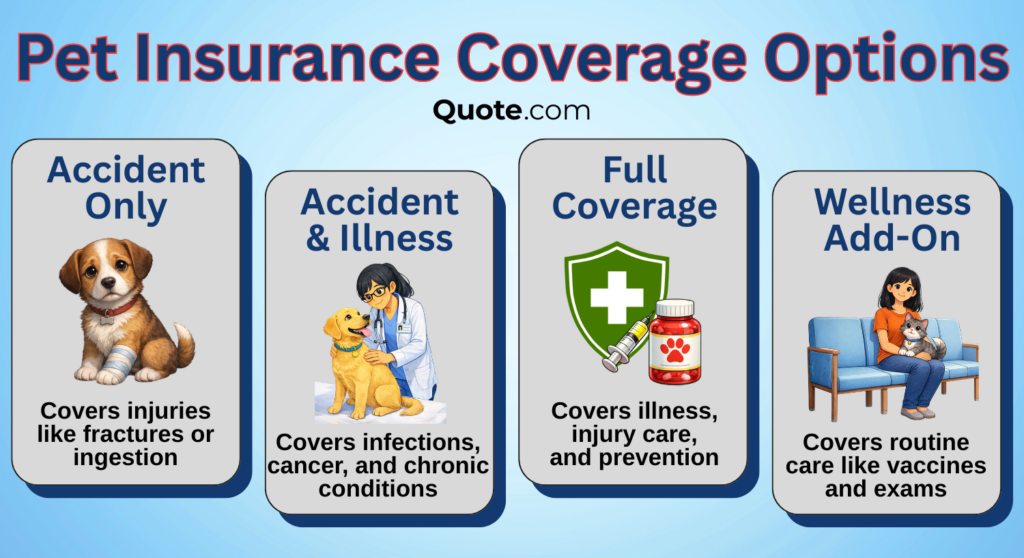
Companies like the Hartville Pet Insurance Group offer two basic plans: the Accident Plan and the Complete Coverage Plan (which includes accidents and injuries), along with the option to select your annual deductible and reimbursement level.
Healthy Paws Pet Insurance offers one plan that covers all accidents and illnesses, including cancer, as well as hereditary and congenital conditions.
We don't want pet parents to have to choose which accidents and illnesses to cover—that's like playing roulette with your four-legged family member.
Rob Jackson CEO of Healthy Paws Pet Insurance
Like the Hartville Pet Insurance Group, this plan allows for adjustments to premiums and reimbursement levels to fit the consumer’s budget.
Not sure how to choose the right pet insurance for your dog or cat? Most pet owners will likely want an accident and illness plan, rather than an accident-only plan. Whatever plan you choose, choosing types of pet insurance coverage that cover more than just wellness visits and vaccinations is in your best interest.
Pet Insurance Coverage Breakdown| Category | What’s Covered | Details |
|---|---|---|
| Accidents | Broken bones, toxic ingestions | Covered by most plans |
| Illnesses | Cancer, arthritis, digestive issues | Waiting periods may apply |
| Hereditary & Congenital | Hip dysplasia, heart disease, IVDD | Must start after policy begins |
| Diagnostic Tests | X-rays, MRIs, blood work | Coverage depends on plan tier |
| Hospitalization | Emergency care, surgery, overnight stays | Usually included |
| Prescription Medications | Antibiotics, pain meds, treatments | Supplements often excluded |
| Specialist Care | Oncologists, dermatologists, cardiologists | Referral required in some plans |
| Alternative Therapies | Acupuncture, chiropractic, hydrotherapy | Limited to select insurers |
| Preventive Care (Add-on) | Vaccinations, flea/tick, wellness exams | Optional rider add-on |
| Behavioral Therapy (Add-on) | Training for anxiety, compulsive behavior | Available from select insurers |
| Dental Care | Dental illness, extractions, oral surgery | Preventive cleaning not covered |
| End-of-Life Care | Euthanasia, cremation, palliative care | Varies by plan |
Additionally, check if the pet insurance policy has a waiting period between enrollment and the start of coverage. Also, be sure to inquire about the reimbursement timeframe after you pay the bill and submit the claim. For example, with the Hartville Pet Insurance Group, Watson says it takes approximately 14 days for a check to arrive.
No matter what plan you choose, it’s important you understand the policy thoroughly, including the proper procedure for filing claims and any specific requirements the company might have.
#7 – What is usually not covered by pet insurance?
There’s a lot to consider when researching pet insurance providers. One of the top pet insurance basics you should ask a company before buying a policy is what its limitations and exclusions are.
A red flag to watch out for is multiple exclusions that render your pet insurance useless for most vet bills.
Pet Insurance Coverage Limitations| Category | Exclusions | Details |
|---|---|---|
| Pre-Existing Conditions | Conditions before coverage | Some curable conditions covered |
| Waiting Periods | Illness 2wk, Accident 5 days, Ortho 6mo | Coverage varies by plan |
| Routine & Preventive Care | Vaccines, flea/tick, food, grooming | Often needs wellness add-on |
| Elective Procedures | Cosmetic care, cropping, docking, declaw | Not covered |
| Breeding & Pregnancy | Breeding, pregnancy, complications | Not covered by most providers |
| Experimental Treatments | Non-FDA drugs, experimental care | Generally excluded |
| Age Restrictions | Enrollment caps after age 14 | Puppies eligible after 6–8wks |
| Behavioral Issues | Behavior training or therapy | Some plans cover with add-ons |
| Dental Care | Routine cleaning, cosmetic care | Only illness/injury covered |
| Bilateral Conditions | Bilateral issues (hip, ligament) | Some plans exclude “second side” |
For example, if you’re buying kitten insurance for congenital conditions on day one, your insurance may only cover your kitten if its condition is curable.
If you have an animal with hereditary issues, make sure that your insurance plan covers common issues for your pet’s breed.
If you have an English Bulldog, you can bet it’s going to have some problems with its respiratory system. It’s just common in the breed.
Christie Long Chief Veterinarian for PetCoach.com
Elective procedures, such as tail docking or cosmetic care, also won’t be covered by a top-rated animal insurance policy.
Not sure what to look for in pet insurance plans? Here are Jackson’s top five pet insurance questions to ask when comparing pet insurance policies:
- What does the pet insurance policy cover? Does it cover cancer and hereditary conditions?
- Are there any limits on benefits (per-incident limits, annual limits, or lifetime limits)?
- Is the claim payment based on the actual vet bill, or will the insurance pay pre-determined amounts for each accident or illness?
- How fast and easy is the pet insurance policy’s claims process? Can I submit my vet bill online or via smartphone?
- What do actual customers say about their pet insurance in online reviews?
- Does the pet insurance policy cover diseases or problems specifically associated with certain breeds?
Every pet owner’s needs will differ when considering questions to ask before buying pet insurance for their pet.
Make sure you check that your pet’s specific needs are covered by the insurance policy you choose
#8 – Who sells the best pet insurance policies?
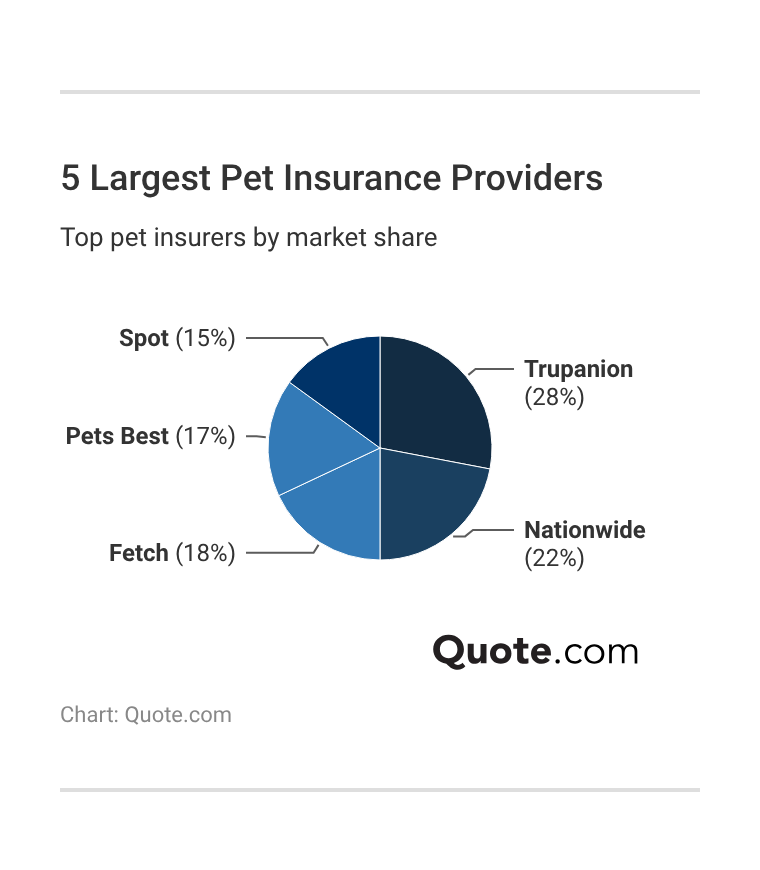
Looking at a pet insurance comparison chart can help you see which pet insurance companies are the largest in the market. Some of the most popular companies are Trupanion and Nationwide.
Trupanion holds 28% market share in the pet insurance industry, making it the leading provider of insurance for pet owners.
Nationwide has a 22% market share in the insurance industry, making it the second leading provider. If you want to keep all your insurance in one place, Nationwide offers a range of other coverages besides pet insurance, including auto, home, and business insurance.
If you want a company that specializes solely in pet insurance, however, then companies like Trupanion and Healthy Paws may be your top choices. You can get a Healthy Paws insurance quote to see what you’ll pay for your pet.
Free Pet Insurance Comparison
Compare Quotes From Top Companies and Save
Planning Your Pet Care Budget: Vet Bills & More
Of course, if you’re considering paying for pet insurance, you want to see real-life results in dollars and cents.
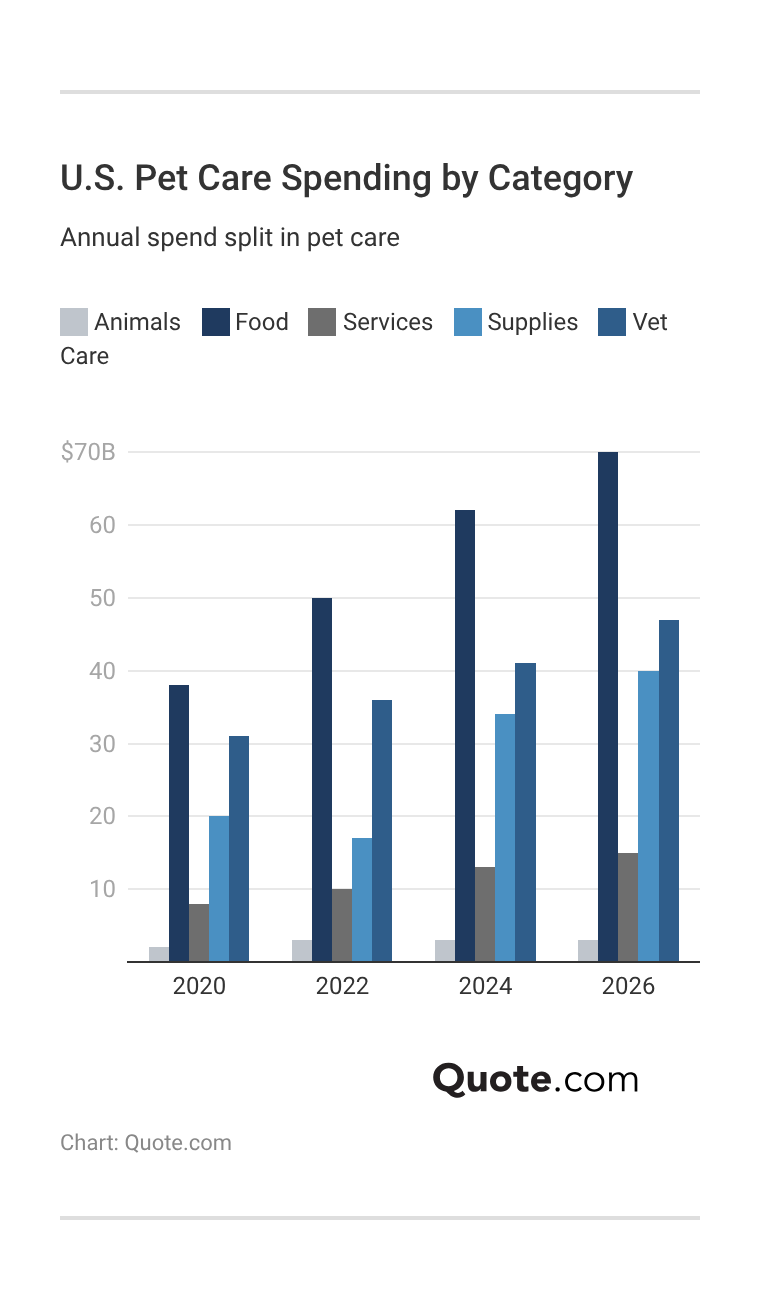
While food is the highest cost for a pet owner, vet care is a close second. In 2026, vet bills cost pet owners an average of $47B.
Pet insurance helps cover the cost of several different conditions treated by vets. More and more consumers are turning to pet insurance to help pay their vet bills.
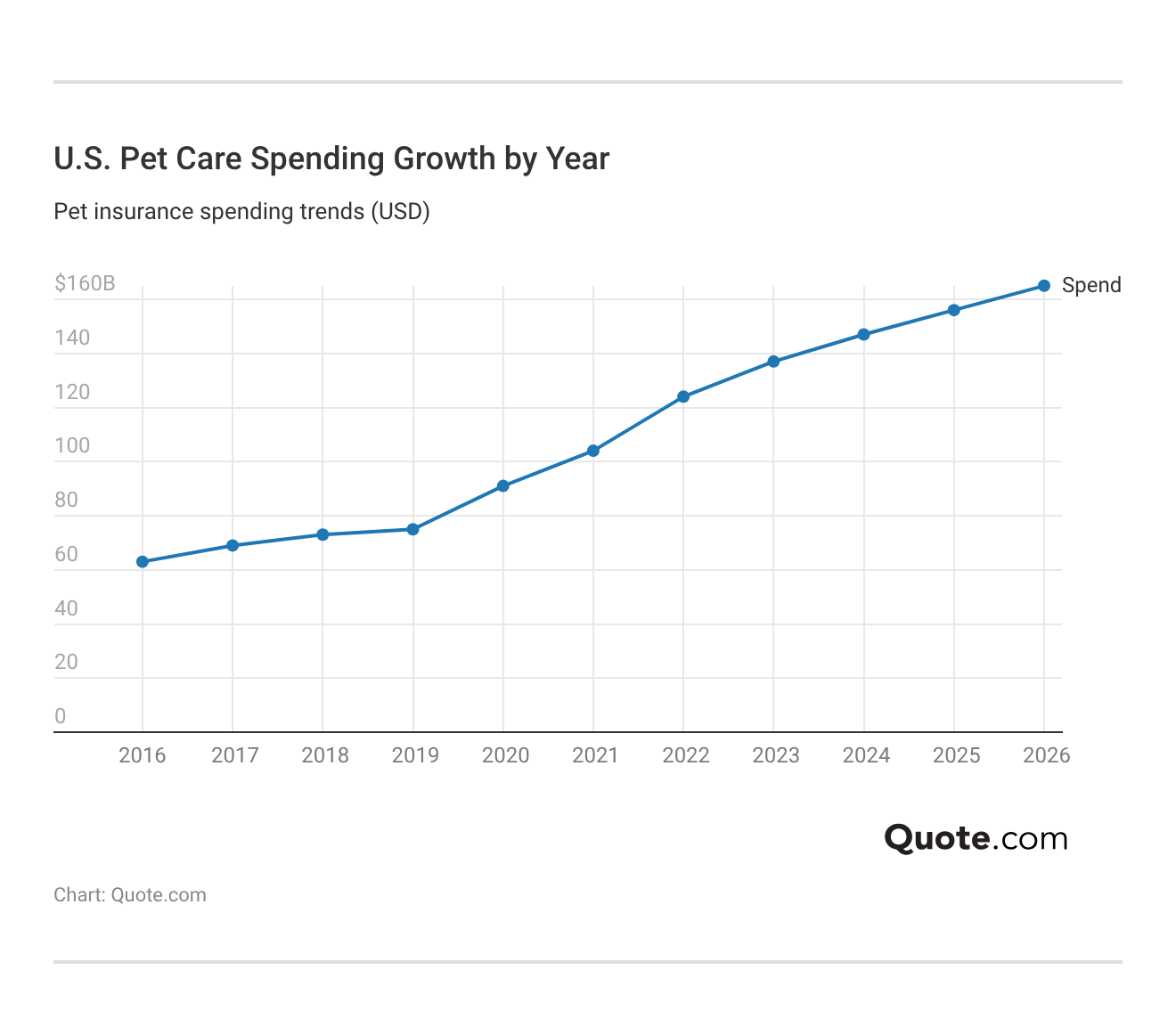
In just a decade, the amount pet owners have spent on pet insurance increased from $63B to $165B.
Consumer Reports also did a pet insurance survey that looks into vet bills. The independent, nonprofit organization compared the vet bills of Guinness, an almost 12-year-old Labrador mix from New York, and Freddie, an almost 9-year-old mixed-breed cat from Connecticut in one of its guides to pet insurance.
Guinness’ owners have paid for two surgeries and follow-up care for the dog’s skin cancer, and Freddie’s owners have paid for a dental cleaning under anesthesia as well as prescription cat food and medication to treat infections. Related: Best Pet Insurance for Cats
Comparing Pet Insurance Prices
The main consideration when evaluating providers’ answers is how the coverage pays out. Just as with human health insurance, the cost of coverage can vary.
Full coverage pet insurance plans will be the most expensive, while wellness-only plans will be the cheapest.
[table “2461” not found /]Ultimately, what to look for in a pet insurance policy comes down to a numbers game, as you want to find something that works with your budget.
You might choose the most popular pet insurance policy that covers just accident and illness (81% of pet insurance policies are accident and illness plans for dogs), or you could go with blanket coverage that also includes wellness visits and routine care.
Your Deductible Impacts What You Pay for Pet Insurance
Costs vary depending on your pet’s breed (i.e., purebreds cost more to insure because they’re more prone to some hereditary conditions); age (plans may cost more as your pet gets older); the rising cost of veterinary care; and the coverage options you choose, such as your deductible amount.
Some insurers pay a flat percentage of covered costs after insurance deductibles are met, while others calculate reimbursements based on the “usual and customary costs” of vet care in your area.
Pet Insurance Coverage Details by Provider| Company | Deductible | Reimbursement | Annual Limit |
|---|---|---|---|
| $100–$1k | 70–90% | Unlimited only |
| $250–$2.5k | 70–90% | $5k–15k range |
| $100–$750 | 70–100% | Unlimited only |
| $100–$1k | 70–90% | Unlimited only |
| $250–$1k | 50–90% | $5k–10k+Unlimited |
| $50–$1k | 70–90% | $5k–Unlimited |
| $50–$1k | 70–90% | $5k–Unlimited |
| $100–$1k | 70–90% | $2.5k–Unlimited |
| $100–$1k | 70–90% | $2.5k–Unlimited |
| $0–$1k | 90% (fixed) | Unlimited only |
Your monthly premium will also be determined by the annual maximum coverage amount you choose ($5,000, $8,000, $10,000, $15,000, etc.).
Higher deductibles will result in lower rates on your pet insurance policy, but make sure you choose a deductible you are comfortable paying out of pocket.
Your Pet’s Age Will Impact What You Have to Pay for Insurance
The sooner you buy pet insurance, the better, as pet insurance is cheapest for healthy young pets. Pet insurance for cats starts at $18 per month for a two-year-old cat.
If you buy pet insurance for an eight-year-old cat, however, quotes for cat insurance start at $26 per month. That’s an extra $96 more per year on average.
[table “1541” not found /]Some of the cheapest companies for cats of all ages are Travelers and Pets Best. Travelers also offers traditional insurance for individuals, such as auto and home insurance.
Our review of Travelers found that it offers a significant bundling discount for customers who buy both home and auto coverage.
Our pet insurance plans do not have an age limit for enrollment or continuing care, but the older the pet, the higher the premium cost due to older animals experiencing more illnesses and an increase in vet visits.
Liz Watson Chief Marketing Officer at Hartville Pet Insurance Group
The increase in rates also applies to dogs, with the average dog insurance price starting at $35 per month for a two-year-old dog.
However, pet insurance rates start at $54 per month for an 8-year-old dog, a $19 dollar per month difference.
Pet Insurance Monthly Rates for Dogs by Age| Company | Age: 2 | Age: 4 | Age: 6 | Age: 8 | Age: 10 | Age: 12 | Age: 14 |
|---|---|---|---|---|---|---|---|
| $39 | $44 | $50 | $58 | $70 | $85 | $105 |
| $35 | $40 | $47 | $57 | $70 | $90 | $115 |
| $44 | $49 | $55 | $64 | $77 | $92 | $114 |
| $37 | $42 | $48 | $56 | $68 | $82 | $100 |
| $43 | $48 | $54 | $62 | $75 | $90 | $112 |
| $38 | $43 | $49 | $57 | $69 | $84 | $102 |
| $35 | $40 | $46 | $54 | $65 | $78 | $95 |
| $80 | $95 | $115 | $135 | $165 | $200 | $240 |
| $40 | $45 | $51 | $59 | $71 | $86 | $106 |
| $45 | $50 | $56 | $65 | $78 | $94 | $116 |
Some of the cheaper companies for dogs include Progressive, Pets Best, Geico, and Fetch Pet Insurance.
If you aren’t sure what company to pick, it can be helpful to do a dog insurance quotes comparison to see which of your top companies offers the best rate. You can get pet insurance quotes quickly today with our free tool.
The Type of Pet Insurance Claim Determines What You Pay
The most common claims made for animals can be expensive, but insurance helps alleviate the burden.
For example, while the cost to treat hip dysplasia at the vet is around $3,200, insurance drops that cost to an average of $640.
[table “2470” not found /]The claim cost you are responsible for paying at your vet is based on an 80% reimbursement. The actual out-of-pocket amounts will vary based on factors such as your plan, deductible, and coverage limits.
The cost of pet insurance is often well worth it, however. Pet insurance protects your finances from unexpected pet illnesses that can put you in debt, something that a monthly insurance premium won’t do.
Most Common Pet Insurance Claims
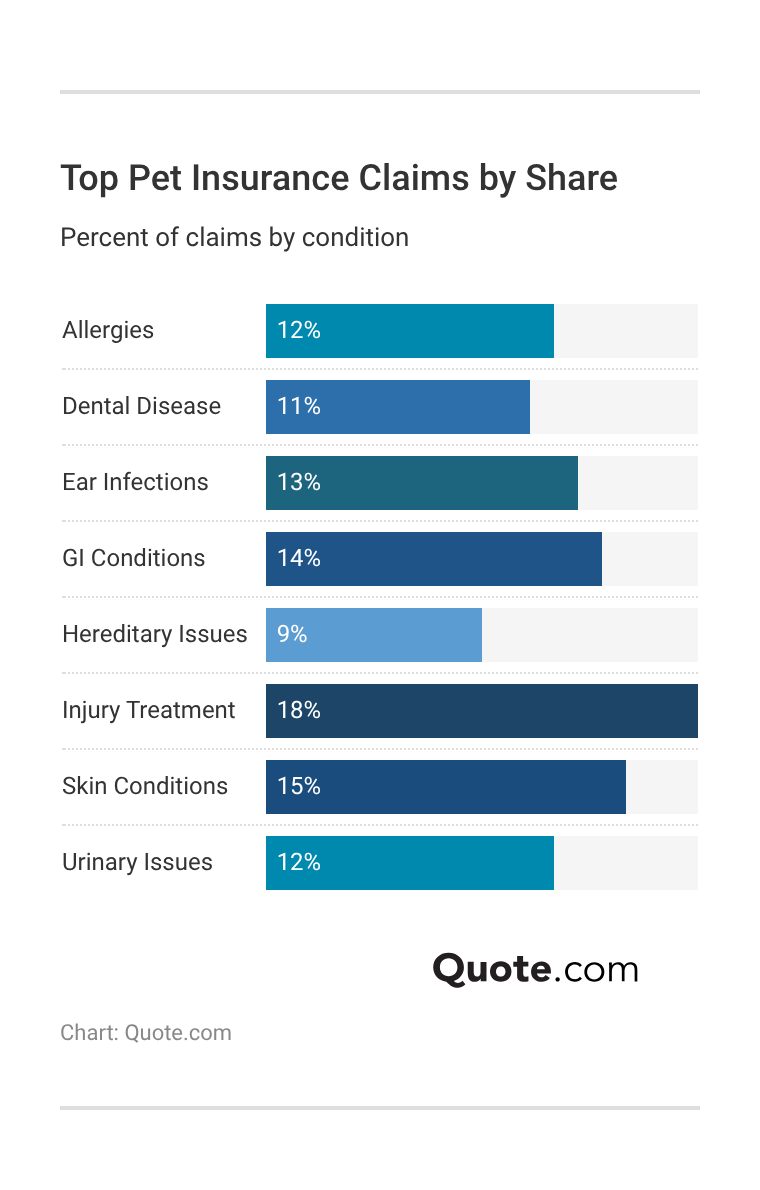
The most common type of pet insurance claim is claims for injuries, which could range from anything from cuts to fractures.
Pet insurance claims for skin conditions are the second most common type of pet owner claim.
Pet owners also make claims for hereditary issues that show up in their pet, such as hip dysplasia.
Generally, these hereditary issues must be present and treated after the purchase of pet insurance to be covered.
Free Pet Insurance Comparison
Compare Quotes From Top Companies and Save
Finding the Best Insurance for Your Pet
The reality is that illness can come suddenly, like when Braun’s 7-year-old Labrador mix collapsed unexpectedly. Before he and his wife had a clear diagnosis, their bill was more than $3,000, and that was just from testing.
Their final bill was double that amount. Fortunately, having pet insurance gave them peace of mind, knowing they could afford to do everything possible to help their furry child.
As a veterinarian, I am always happy when a client says, 'No problem, I have insurance,' when a pet needs a big procedure or a life-saving surgery.
Dr. Judy Morgan Holistic Veterinarian
Pet health insurance deserves a serious look for those wanting to provide their dog or cat with high-quality healthcare throughout his/her life. You can compare insurance to find the best deal for your pet. Choosing a reputable insurance comparison site will help you get the best online pet insurance quotes. See a list of the top-rated sites here: Best Insurance Comparison Sites
If you want to find great coverage for your pet today, use our free quote tool to compare rates at pet insurance companies in your area. Whether you are looking for quotes for dog insurance or small animal insurance, it will help you find the best deal.
Frequently Asked Questions
What factors affect choosing a pet insurance company?
Key factors include:
- Coverage options (accidents, illness, hereditary issues),
- Policy fine print (exclusions, waiting periods, maximum payouts),
- Cost variables (premium rates, deductibles, reimbursement levels),
- Flexibility (ability to customize coverage),
- Customer support (accessibility, claims handling)
What questions should I ask when getting a pet insurance quote?
Here are some questions to ask about:
- Coverage of pre-existing conditions,
- Waiting or affiliation periods before coverage starts,
- Breed-specific or congenital exclusions,
- Deductibles, reimbursement rates, and any annual limits,
- Whether wellness care is included or available as an add-on
How to choose pet insurance?
- Identify the coverage you need (accident-only vs. illness vs. extras).
- Compare quotes using trusted tools
- Inspect policy terms: limits, exclusions, deductibles, and reimbursement.
- Read reviews to assess claim experiences and customer support
- Enroll early—young, healthy pets typically risk fewer exclusions and offer better rates
Is pet insurance a waste of money?
Veterinary costs, especially for emergencies and chronic care, continue to rise, and pet insurance can offer financial peace of mind.
How much does pet insurance cost per month?
Pet insurance costs around $62 a month for dogs and $32 a month for cats (accident & illness plans).
How to shop for pet insurance?
- Use comparison tools to quickly compare quotes and coverage tiers.
- Evaluate policies based on: coverage limits, exclusions, deductibles, and reimbursement rates.
- Read reviews and check claim history for insurers.
- Secure coverage early to lock in favorable terms and avoid pre-existing condition exclusions.
How much is dog insurance?
The average monthly cost for a dog, covering accidents and illness, is about $60-62 a month, depending on the provider and plan
Get a FREE Quote in Minutes
Insurance rates change constantly — we help you stay ahead by making it easy to compare top options and save.